Oil Transfer System: Efficient and Safe Industrial Oil Handling
An Oil Transfer System is an industrial fluid-handling solution designed to pump, transfer, filter, and distribute cooking oils, liquid fats, shortening, and similar food-grade liquids safely and efficiently. These systems are particularly valuable for food processing plants, commercial bakeries, industrial frying operations, and snack manufacturing facilities where large volumes of oil must be moved regularly.
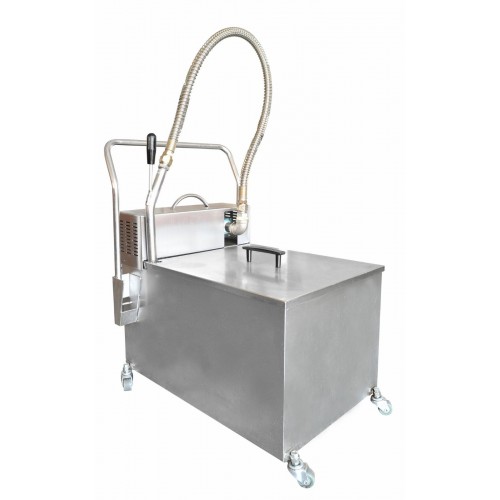
Modern oil transfer equipment helps businesses reduce manual handling, improve workplace safety, maintain consistent production, and streamline bulk liquid management.
What Is an Oil Transfer System?
An Oil Transfer System is a mechanical pumping system used to move oil from one location to another, such as from storage tanks or containers to industrial fryers, processing equipment, or disposal systems.
Unlike manual bucket or open-container handling, an automated oil transfer system provides controlled and enclosed fluid movement. Depending on the application, systems can use positive-displacement or centrifugal pumping technology and may incorporate filtration during the transfer process.
CM Machine Services offers commercial-grade oil transfer solutions designed for demanding food-processing environments, including portable oil filter transfer units with capacities of 70L, 120L, and 200L.
How Does an Oil Transfer System Work?
An oil transfer system uses a pump, hoses or piping, fittings, and other components to move oil through a controlled fluid path. The system draws oil from a source and transfers it to the required destination.
In food-processing applications, the system can be configured for different operating requirements, including:
- Transferring fresh cooking oil to fryers
- Moving oil between storage containers
- Filtering oil during transfer
- Removing spent frying oil
- Draining processing lines
- Connecting bulk oil storage to production equipment
Some systems also provide reversible flow, allowing operators to transfer oil in one direction and reverse the pump for draining or spent-oil extraction.
Why Is an Oil Transfer System Important for Food Processing?
Handling hot or high-volume cooking oil manually can create significant operational and safety challenges. Spills can contaminate production floors, while direct exposure to hot oil can increase the risk of burns.
An automated Oil Transfer System creates a more controlled and enclosed process. It can help reduce manual labor, minimize spills, improve production-floor cleanliness, and provide more consistent oil handling.
For high-volume food manufacturers, automated fluid transfer can also support smoother production workflows and reduce unnecessary interruptions.
What Are the Key Features of an Industrial Oil Transfer System?
A properly designed system can include several features suited to demanding food-production environments:
Food-Grade Stainless Steel Construction
Stainless steel components provide corrosion resistance and are suitable for environments requiring frequent cleaning and sanitation.
High-Temperature Seals
Thermal-resistant gaskets and mechanical seals are designed to support the safe transfer of hot cooking oil while helping prevent leaks.
Enclosed Pumping
Closed-pipe transfer reduces exposure to external contaminants while helping protect operators from splashes and direct contact with hot liquids.
Inline Filtration
Optional filtration can remove food particles, crumbs, and carbonized material from frying oil during transfer, helping support oil management and potentially extend usable oil life.
Reversible Pumping
Reversible flow allows oil to be transferred for filling applications and pumped in reverse for draining or spent-oil recovery.
Sanitary Connections
Sanitary fittings and accessible equipment designs make cleaning and routine maintenance easier for food-processing operations.
Where Are Oil Transfer Systems Used?
Oil Transfer Systems are commonly used in industries that handle substantial quantities of cooking oils and liquid fats. Typical applications include:
- Industrial food-processing plants
- Commercial bakeries
- Large-scale frying operations
- Snack-food manufacturing facilities
- Food-production lines
- Bulk cooking-oil handling operations
These systems can be configured for different flow requirements, storage arrangements, hose lengths, and oil viscosities.
What Are the Benefits of Using an Oil Transfer System?
Investing in an industrial oil transfer solution can provide several operational benefits:
Improved workplace safety: Reduces the need for manual handling of hot liquids.
Faster oil movement: Automates repetitive transfer processes and supports continuous production.
Better cleanliness: Enclosed pumping helps reduce spills and floor contamination.
Consistent oil handling: Controlled pumping supports more predictable fluid movement.
Filtration capability: Integrated filtration can help remove unwanted particles from cooking oil.
Reduced manual labor: Automation minimizes time spent moving oil between containers and equipment.
How Do You Choose the Right Oil Transfer System?
The right system depends on factors such as oil type, viscosity, temperature, required flow rate, transfer distance, storage capacity, filtration requirements, and production volume.
Portable systems can be suitable when oil needs to be moved between multiple locations, while fixed systems may be preferable for facilities with dedicated bulk storage and permanent production lines.
CM Machine Services provides oil transfer equipment for commercial and industrial applications and can help businesses determine appropriate pump specifications and configurations based on their operational requirements.
Why Choose CM Machine Services for Oil Transfer Equipment?
CM Machine Services supplies commercial food-processing equipment and offers Oil Transfer Systems designed for demanding production environments. Its product range includes portable oil filter transfer systems in 70L, 120L, and 200L capacities, providing options for different operational requirements.
For businesses looking to improve oil handling, filtration, safety, and production efficiency, an appropriately configured Oil Transfer System can provide a reliable solution for managing cooking oils and liquid fats throughout the processing workflow.


Comments
Post a Comment